Every piece of onboarding advice written for SaaS assumes one thing that marketplaces cannot assume: that the product can deliver value to a user on its own. Show them the feature, remove the friction, get them to the aha moment. It works because the software is the value.
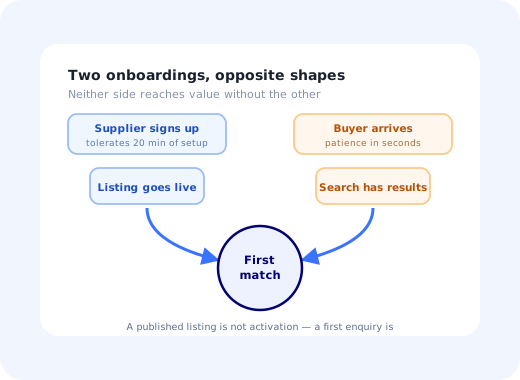
In a marketplace, the software is the introduction. A photographer who has uploaded a perfect portfolio has received nothing. A customer who has found a beautifully designed search page with four results in their city has received nothing. Value only appears when the two sides meet, which means marketplace onboarding is really two different onboarding problems tied together by a constraint neither of them controls.
That constraint changes the design of both flows. Supply-side onboarding is long, effortful and front-loaded, and suppliers will tolerate it because they are chasing income. Demand-side onboarding has to be nearly invisible, because buyers arrive with an intent and no patience at all. Building one flow and reusing it for both, which is the default outcome when a single team owns onboarding, reliably produces a signup wall that annoys buyers and a setup flow too shallow to produce good listings.
This guide covers what makes marketplace onboarding structurally different, how the two sides diverge, which side to onboard first and why, how to soften the cold-start problem from inside the product, a step-by-step flow for a supplier's first live listing and a buyer's first completed transaction, the metrics that predict marketplace health rather than flattering it, and six in-product patterns that work on both sides.
Key Takeaways
- Two flows, opposite shapes. Supply tolerates effort in exchange for future income; demand tolerates almost none. The same onboarding cannot serve both.
- Activation depends on the other side. A supplier is only activated when a real enquiry arrives, which means part of your activation metric is outside the onboarding flow.
- Onboard the harder side first, usually supply, and open demand only where supply is already dense enough to produce a match.
- Narrow the market before you widen it. Liquidity in one city or one category beats thin coverage everywhere, and it is an onboarding decision as much as a growth one.
- Publish first, verify later. A supplier's first session should end with something live; payout and tax details belong after the first enquiry, not before it.
- Liquidity is the real onboarding metric: the share of listings that transact and searches that convert. Signups on either side prove nothing on their own.
What Is Marketplace Onboarding?
Marketplace onboarding: definition
Marketplace onboarding is the process of getting new users of a two-sided platform to their first successful outcome, where that outcome depends on the presence of the other side. A supplier's first success is a live listing that receives a real enquiry; a buyer's first success is a completed transaction. Because neither can be delivered by the product alone, marketplace onboarding combines conventional user onboarding with expectation management while the other side catches up.
The vocabulary varies by category (sellers and buyers, hosts and guests, freelancers and clients, drivers and riders, merchants and shoppers) but the structure is always the same. One side creates the inventory, the other side consumes it, and the platform's job is to make the distance between them small enough that a match happens before either party gives up.
Three differences follow, and they are worth stating plainly because they invalidate a lot of standard onboarding advice:
- Activation is partly out of your hands. You can run a supplier through a flawless setup and still fail them, because nobody enquired. Part of the metric lives outside the flow.
- The two flows are in tension. The fastest way to satisfy buyers is more supply; the fastest way to satisfy suppliers is more demand. Roadmaps get pulled in both directions by the same success.
- Failure is asymmetric. A supplier who waits a month for their first enquiry is disappointed but still present. A buyer who searches once and finds nothing usually never comes back, and, crucially, tells the friend who referred them.
Supply-Side and Demand-Side Onboarding Are Opposites
Sellers, hosts, providers, freelancers
- Motivation: future income. They will invest real time up front.
- Session length: long. Twenty minutes of setup is acceptable if it is clearly leading somewhere.
- First success: a live listing that receives a genuine enquiry, not the moment they hit publish.
- Main failure: abandoning mid-setup at a field that felt like a commitment (payouts, tax ID, verification).
- Right pattern: a persistent, resumable checklist with a completeness meter.
- Tone: partner. They are building a shopfront, not filling in a form.
Buyers, guests, clients, shoppers
- Motivation: a task they want done now. Patience measured in seconds.
- Session length: short. Every screen before results is a screen that loses people.
- First success: a completed transaction, or, at minimum, a search that returns something worth clicking.
- Main failure: a signup wall before value, or a first search that returns an empty page.
- Right pattern: browse before signup, then progressive profiling at the point of need.
- Tone: get out of the way, then reassure at the moment of payment.
The most consequential line in that comparison is the one about first success. Many marketplaces define supplier activation as "published a listing", because it is the last event the onboarding flow controls. It is a convenient metric and a misleading one: a supplier whose listing sits untouched for six weeks is not activated, they are waiting to churn. Defining activation as "received a first enquiry" is uncomfortable, because it makes the onboarding team responsible for something the growth team controls, which is exactly the accountability a marketplace needs.
The Liquidity Problem: Why Onboarding Order Matters
Liquidity is the probability that a given participant finds a match in a reasonable time. It is the health metric of any marketplace, and it is also, awkwardly, the input to both onboarding flows: high liquidity makes onboarding easy on both sides, and low liquidity makes even excellent onboarding fail.
Because liquidity is circular, the only escape is to make the market smaller until density is achievable. Not fewer users: a narrower definition of "a match". One city. One category. One job type. A marketplace with eighty suppliers in a single postcode feels alive; the same eighty suppliers spread across a country feels empty to everybody, and every onboarding flow in it underperforms for reasons that have nothing to do with the flow.
One city, category or job type where you can plausibly reach density.
Hands-on if necessary. Quality of listings matters more than count.
Every buyer who searches must find something real.
Then repeat in the next market, using the same flows.
Which side first? Onboard the side that is harder to acquire: in most marketplaces, supply. Suppliers will wait; buyers will not. The exception is a marketplace where supply is trivially easy to add but only bothers to show up when demand is proven, in which case you seed demand first and often fill supply manually until it holds.
Supply-Side Onboarding: Getting to a First Live Listing
The goal of the first supplier session is one thing: something published. Everything that does not serve that goal should be deferred, and almost everything can be.
1. Ask only what publishing requires
Split your supplier fields into two lists: what is legally or functionally required for a listing to appear, and everything else. Verification documents, tax details and payout accounts almost always belong in the second list. They feel like foundations to the platform team and like a commitment to someone who is still evaluating whether this is worth their afternoon. The moment to ask for payout details is when there is money waiting.
2. Make the first listing feel like progress, not paperwork
A supplier is building a shopfront, and the flow should look like it. Show a live preview beside the form so every field visibly improves something. Pre-fill whatever you can infer: location, category, currency, business name from the email domain. Where a field genuinely needs thought, say what good looks like in one line rather than linking to a guide nobody will open.
3. Use a completeness meter that explains what each step earns
A progress indicator works far harder on the supply side than the demand side, because the work is genuinely long and the payoff is genuinely deferred. The version that works states the benefit rather than the percentage:
- ✓ Title and description : you appear in search
- ✓ Three photos : buyers open your listing twice as often
- ✓ Price and availability : you can receive enquiries
- ○ Response time set : unlocks the "fast responder" badge
- ○ Payout details : required before your first payment, not before your first enquiry
Note the last line. Naming the deferred item and explaining why it can wait removes the anxiety that makes suppliers abandon at exactly that point.
4. Tell them what happens next, with a timeframe
The screen after publishing is the most under-designed screen in most marketplaces. It usually says "Your listing is live!" and nothing else, which leaves the supplier alone with the question they actually have: when will something happen? Say it. "Most listings in your category get their first view within two days, and their first enquiry within a week" is worth more than any congratulation, and it converts a silent fortnight from evidence of failure into an expected wait.
5. Keep them warm until the first enquiry arrives
The window between publishing and first enquiry is where supply churns. Fill it with real signals: view counts, search appearances, a comparison against similar listings, one concrete improvement suggestion. If the wait is going to be long because the market is still thin, say so honestly; suppliers forgive a young marketplace far more readily than they forgive being left in silence.
Demand-Side Onboarding: Getting to a First Transaction
The demand side runs on the opposite principle. Every screen you add before a result is a screen that costs you buyers, and buyers are the side that does not come back.
1. Let them search before they sign up
Requiring an account before showing results is the single most expensive decision a marketplace can make in its signup flow. A buyer arrived to find out whether you have what they need; asking them to register first inverts the exchange. Show results, then ask for an account at the first point where it is genuinely required (saving, messaging, booking or paying) where the reason is self-evident.
2. Make any onboarding question change the results visibly
Preference questions are worth asking only if the answer alters what the buyer sees within the next screen. Location and date usually qualify. "What brings you here today?" usually does not, unless the answer routes them somewhere different. When a question does earn its place, the personalisation it produces should be visible immediately, or the buyer concludes the form was for you rather than for them.
3. Never let the first search return nothing
An empty result page is the highest-cost screen in a young marketplace. Design it as a real state rather than an error: widen the radius automatically and say you did, show adjacent categories, offer to notify them when supply arrives, and, where it is honest, let them post a request that suppliers can answer. A buyer who leaves an alert has not converted, but they have not been lost either.
4. Put the trust signals at the moment of hesitation
First transactions stall on risk, not on comprehension. The buyer is wondering what happens if the supplier does not show up, if the item is wrong, if the money disappears. Reviews, guarantees, cancellation terms and payment protection belong on the checkout screen at the moment of doubt, not in a trust-and-safety page nobody visits. A short tooltip next to the pay button will do more for conversion than a redesign of the listing page.
5. Treat the first transaction as the start of onboarding, not the end
The period immediately after a first purchase decides whether you have a customer or a one-time visitor. Confirm clearly, set expectations about delivery or arrival, make the support route obvious, and, once it has gone well, ask for the review that becomes the trust signal for the next buyer. This is where marketplaces compound: each completed transaction is onboarding material for two future users.
Marketplace Onboarding Metrics
Measure each side separately, then measure the match. Reporting total signups across both sides as one number is the most common way a marketplace hides a liquidity problem from itself.
| Side | Metric | What it tells you | Common trap |
|---|---|---|---|
| Supply | Listing completion rate | Whether the setup flow itself works | Counting drafts as listings |
| Time to first live listing | How much friction sits before publication | Measuring from signup instead of from first setup screen | |
| Share receiving a first enquiry within 14 days | The real supplier activation metric | Declaring activation at publish and stopping there | |
| Demand | Non-empty search rate | Whether supply density is sufficient where buyers are looking | Averaging across markets and hiding the thin ones |
| Search-to-transaction rate | Whether results are relevant and trust is sufficient | Blaming the checkout for a relevance problem | |
| Time to first transaction | How long the demand side takes to reach value | Excluding the people who never got there | |
| Both | Liquidity: listings that transact per period | Whether the marketplace works at all, per market | Reporting it globally instead of per city or category |
| Repeat rate on both sides | Whether the first match was good enough to repeat | Treating a first transaction as the finish line |
If you can only track one number per market, track the share of searches that end in a transaction. It moves when supply is too thin, when relevance is poor, and when trust is missing, which is a weakness as a diagnostic and a strength as an alarm. The individual onboarding metrics then tell you which of the three it was.
Six In-Product Patterns That Work on Both Sides
-
The resumable supplier checklist
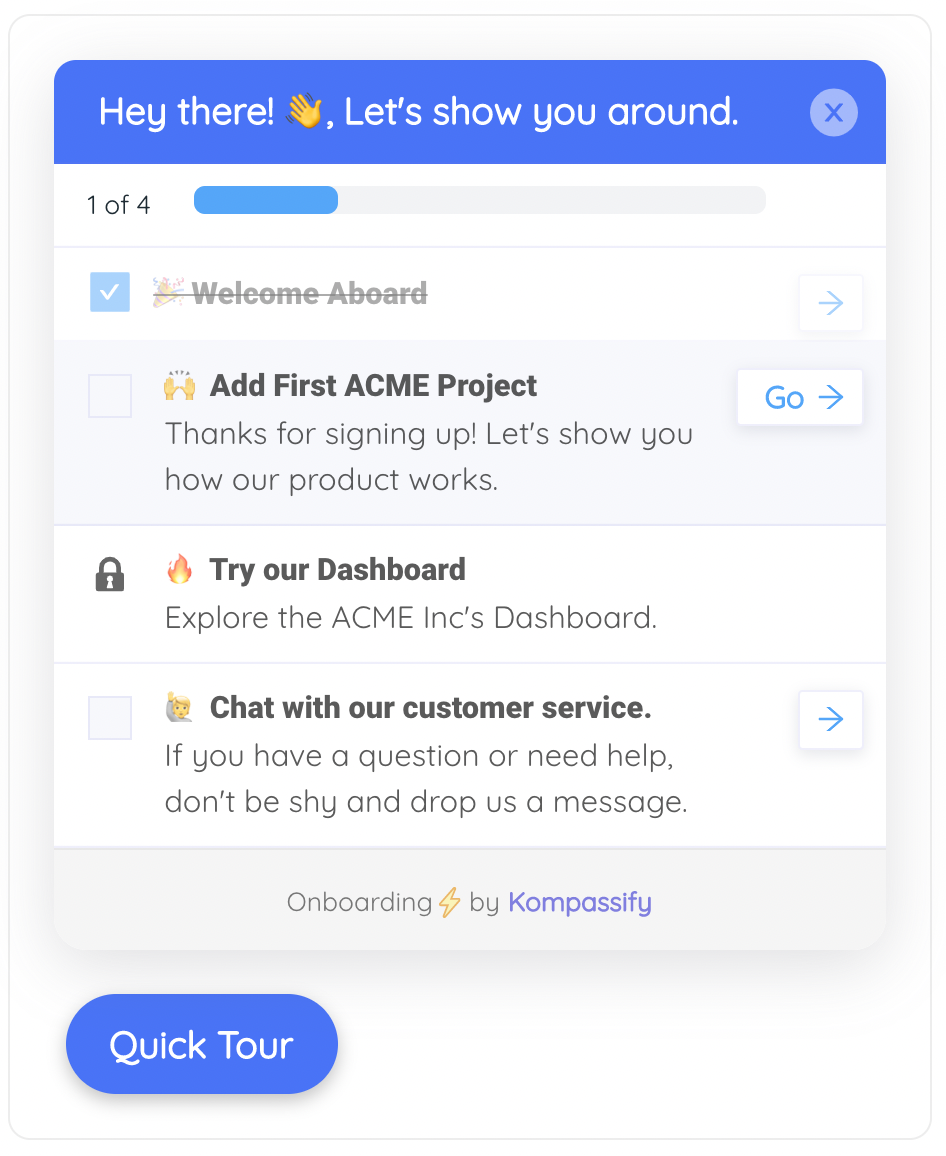
Supply-side setup rarely finishes in one sitting, so the flow has to remember. A persistent checklist that shows what is done, what is left and what each remaining item earns turns a long form into a series of small wins, and gives a returning supplier somewhere obvious to restart.
-
The live preview beside the form
Suppliers are creating something public and want to see it. A preview that updates as they type converts an administrative task into a creative one, and it substantially reduces the number of listings that go live with a placeholder title.
-
Search before signup
Let demand-side users see real inventory before you ask for anything. The account request then arrives attached to a reason they can see (saving this, messaging this supplier, booking this slot) rather than as a toll gate.
-
The designed empty state
Every young marketplace has thin corners. Treat the no-results page as a product surface: auto-widen the search and say so, suggest adjacent options, offer an alert, or let the buyer post a request. Never a blank page with a magnifying glass.
-
Contextual trust at the decision point
Guarantees, cancellation policy and payment protection shown next to the button that commits money, not on a separate page. A single tooltip at the moment of hesitation outperforms an entire trust-and-safety section.
-
Role-targeted guidance
Suppliers and buyers share a product and must not share onboarding. Every tour, tooltip and checklist should be targeted by role, and users who are both, common in peer-to-peer marketplaces, need a deliberate decision about which flow they see first.
Marketplace Onboarding: Do vs. Don't
✅ Do
- Design two separate flows with two separate definitions of success
- End the first supplier session with something published
- Defer payout, tax and verification until money is imminent
- Show results to buyers before asking for an account
- State a realistic timeframe for a supplier's first enquiry
- Narrow the market until liquidity is achievable, then widen
- Design the empty search result as a real state
- Target every piece of guidance by role
❌ Don't
- Reuse one onboarding flow for both sides
- Count "listing published" as supplier activation
- Put a signup wall in front of search results
- Ask preference questions that change nothing on screen
- Leave a new supplier in silence after publication
- Launch demand in a market where supply is still thin
- Report combined signups across both sides as one number
- Hide trust information on a separate policy page
Building Both Flows With Kompassify
The transaction mechanics of a marketplace are core engineering work. The guidance layer around them (the walkthrough that gets a supplier to publish, the checklist that brings them back to finish, the tooltip that reassures a buyer at checkout) usually competes with that same engineering backlog, which is why it never ships. Kompassify lets a product team build and change it directly on the live marketplace:
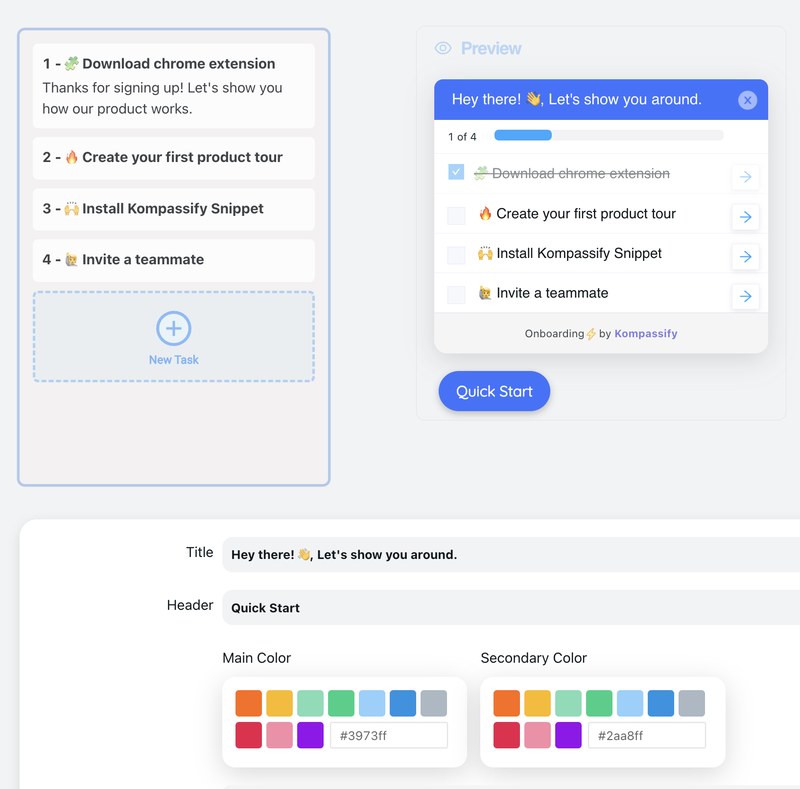
- Two flows, cleanly separated. Target every tour, checklist and tooltip by role so suppliers and buyers never see each other's onboarding, and users who are both get a deliberate order.
- A supplier checklist that remembers. Persistent per-user progress means someone who left at step three returns to step four rather than to the beginning.
- Guidance where the form is hard. Tooltips and hotspots on the specific fields that cause abandonment (pricing, availability, verification) without touching the form code.
- Contextual reassurance for buyers. A short message or tooltip at the checkout step, shown only to first-time buyers, targeted so repeat buyers are never interrupted.
- Announcements for thin markets. Tell suppliers when demand arrives in their category, and buyers when supply does, in-app, to the right segment.
- Step-level analytics on both sides. See exactly where each flow stalls, which is the only way to tell a supply-side onboarding problem from a liquidity problem.
Kompassify is GDPR compliant and EU-hosted, free for under 100 monthly active users, with paid plans from $129/month.
Build Both Sides of Your Onboarding Without a Release Cycle
Kompassify adds role-targeted product tours, checklists, tooltips and in-app messages to your existing marketplace, so suppliers reach a first live listing and buyers reach a first transaction, each with guidance built for them. Track completion per step on both sides. GDPR compliant, EU-hosted, and free for under 100 monthly active users.
Start for Free →Frequently Asked Questions
What is marketplace onboarding?
Marketplace onboarding is the process of getting new users of a two-sided platform to their first successful outcome, which, uniquely, depends on the other side of the marketplace existing. A supplier's first success is a live listing that gets seen; a buyer's first success is a completed transaction. Neither is achievable by the product alone, which is what separates marketplace onboarding from ordinary SaaS onboarding: you are not only teaching someone how to use a tool, you are managing their expectations while the other side of the market catches up.
How is marketplace onboarding different from SaaS onboarding?
Three structural differences. First, there are two onboarding flows with opposite shapes: supply-side onboarding is long, effortful and front-loaded, while demand-side onboarding must be almost frictionless. Second, the definition of activation depends on the other side: a perfectly onboarded supplier with no buyers has still failed. Third, the two flows compete for your attention and are usually in tension, because the fastest way to please buyers is more supply and the fastest way to please suppliers is more demand. A single-sided SaaS product has none of these problems.
Which side of a marketplace should you onboard first?
Almost always the harder side to acquire, which in most marketplaces is supply. Suppliers tolerate more setup effort because they are pursuing income, they stay while they wait, and their listings are the inventory that makes the product worth visiting. Demand is usually more elastic and can be turned on later, but it is also unforgiving: a buyer who arrives to an empty catalogue rarely returns. The practical rule is to onboard supply deeply and geographically or categorically narrowly, then open demand only where supply is already dense enough to produce a match.
What is the cold start problem in marketplace onboarding?
The cold start problem is that each side only finds the product valuable once the other side is present, so an empty marketplace gives every new user a bad first experience regardless of how good the interface is. Onboarding cannot solve it, but it can substantially soften it: set expectations honestly during signup, show what is coming rather than an empty grid, narrow the market so density is achievable in one category or city, keep suppliers warm with progress and previews while they wait, and never let a demand-side user land on a genuinely empty result page without an alternative action.
What are the key marketplace onboarding metrics?
Measure each side separately and then measure the match. On the supply side: listing completion rate, time to first live listing, and the share of suppliers who receive their first enquiry within a set window. On the demand side: search-to-result rate, time to first transaction, and the share of first searches that return a usable result. Across both: liquidity, expressed as the percentage of listings that transact and the percentage of searches that convert, in a given period and market. Liquidity is the only number that tells you whether either onboarding flow is actually working.
How do you onboard suppliers or sellers to a marketplace?
Split their setup into the minimum needed to publish and everything else. The first session should end with a live listing, even an imperfect one, because a supplier with nothing published has no reason to return. Defer verification, tax details and payout setup until the first enquiry or first sale makes them urgent, pre-fill everything you can, show a completeness meter that explains what each field earns them in visibility, and follow the first publication with a clear statement of what happens next and when. The most common failure is asking for payout details before the supplier has any reason to believe money is coming.
How do you onboard buyers to a marketplace?
By removing almost everything. Demand-side users arrive with an intent and no patience, so let them search, browse and see results before signing up, and ask for an account only at the point where it becomes genuinely necessary: saving, messaging or paying. Personalisation questions should be optional and few, and any that remain must visibly change the results. The goal is the shortest possible path from arrival to a result that looks like what they came for, and then to a first completed transaction with the trust signals: reviews, guarantees, clear refund terms, placed at the moment of hesitation rather than in a help centre.
Can you build marketplace onboarding flows without engineering time?
The guidance layer, yes. The transaction mechanics are core product work, but the walkthroughs, checklists, tooltips and contextual prompts that carry a supplier to a first listing and a buyer to a first transaction can be built on top of a live marketplace without a release cycle. With a no-code platform like Kompassify you build each flow visually, target it by role so suppliers and buyers never see each other's guidance, and track completion per step to see which side is stalling. Kompassify is GDPR compliant and EU-hosted, free for under 100 monthly active users, with paid plans from $129/month.