Trust is the variable nobody puts on the dashboard and everybody feels the absence of. It does not appear in the funnel, it has no chart, and it is usually only discussed after something has gone wrong. Yet it decides whether a new user connects their real data or a throwaway sample, whether they invite a colleague, whether they read your permission dialog or close the tab, and whether one bad afternoon becomes a churn event or a shrug.
User trust is not a feeling you can market your way into. It is the accumulated result of a series of very small, very concrete moments in the interface: what you ask for and when, what you do when something breaks, whether the thing you said would happen actually happened, and how easy you make it to leave. Every one of those is a design decision somebody on your team made, often without realising it was a trust decision at all.
This guide covers what trust is made of, where it is won and lost in a product, the six signals that carry it, how to make requests without spending it, what to do when you break something, and the patterns that quietly run the balance down.
Key Takeaways
- Trust has three components: can this product do the job, does it act in my interest, and does it behave the same way tomorrow. Weakness in any one of them reads as untrustworthy.
- It is a ledger, not a score. Small deposits accumulate slowly; a single large withdrawal (a silent charge, a lost draft, an unannounced change) clears the balance.
- The riskiest moments are the asks. Every permission, field and connection request is a withdrawal made before any deposit has been earned.
- Errors are the biggest opportunity in the product. A failure handled honestly builds more trust than the same session going smoothly would have.
- An easy exit increases commitment. Visible cancellation and real data export make staying a choice rather than a trap, and people commit harder to choices.
- You cannot measure it directly. Watch the behaviours that only trusting users perform: real data, real teammates, real payment details.
What User Trust Is Actually Made Of
User trust, defined
User trust is a person's willingness to become vulnerable to your product (to give it their real data, their team's time, their money and their professional reputation) based on an expectation that it will behave competently, in their interest, and consistently. It is built from three separable components: capability (it can do the job), intent (it is not trying to take advantage of me), and predictability (it will do the same thing tomorrow). A product can be strong on two and still feel untrustworthy, because users need all three before they commit anything they cannot easily get back.
Separating the three is what makes trust actionable. "Users don't trust us" is not a brief anybody can work from. "Users believe we can do the job but not that we will handle their billing fairly" is, because it points at specific screens (the upgrade flow, the invoice, the cancellation page) instead of at the brand.
Built by visible competence: things loading fast, sensible defaults, no obvious bugs on first contact, an interface that clearly knows the domain. Damaged by broken states and by loading experiences that leave people guessing.
Built by asking for less than you could, by explaining why, and by giving the user the easy exit. Damaged by pre-ticked boxes, hidden charges, and anything that is easier to enter than to leave.
Built by consistent behaviour, honest changelogs, and warnings before things change. Damaged by silent changes to pricing, limits or defaults, even favourable ones.
All three are built in small increments and spent in large ones. One silent charge outweighs a year of good behaviour, because it does not just cost trust in billing; it retroactively casts doubt on everything else.
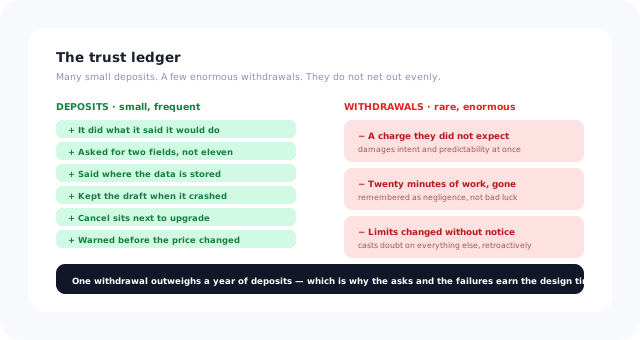
Deposits are small and frequent. Withdrawals are rare and enormous. Plan accordingly.
The Five Moments Where Trust Is Decided
Trust is not distributed evenly across the product. It concentrates in five moments, and a team that gets these right can be mediocre almost everywhere else without paying for it.
1. The first thirty seconds
Before anyone has evaluated a feature, they have made a judgement about competence from load speed, layout, spelling and whether the first screen looks like it was made for someone like them. This is not superficial; it is the only evidence available at that point. Our guide to the first-time user experience covers what that screen has to accomplish.
2. The first ask
The signup form, the permission dialog, the "connect your account" step. Every one of these requests something before the product has delivered anything, which makes it a withdrawal against an empty balance. The size and framing of that ask sets the tone for everything after it; see signup flow best practices for the mechanics.
3. The first failure
Something will break. What the product does in that moment (whether it tells the truth, whether it protects the user's work, whether anyone follows up) carries more weight than any successful session, because it is the only evidence of intent under pressure that the user will ever get.
4. The first bill
The moment a number the user did not choose appears on a card they did choose to hand over. Any surprise here (an amount they did not expect, a charge after a trial they thought they had cancelled, a limit that turns out to be metered) is the most expensive kind of withdrawal available, because it damages intent and predictability simultaneously.
5. The exit
How hard it is to cancel, and whether the user's data comes with them, is read as a direct statement about what you thought of them all along. It is also the moment they are most likely to tell other people about; our exit survey guide covers what to do with the last conversation.
The Six Trust Signals in an Interface
Trust is communicated through concrete signals rather than through claims about being trustworthy. Six do most of the work.
-
1. Accuracy of promises
"This takes two minutes" had better take two minutes. Every small promise the interface makes (a progress bar, a step count, an estimated time) is a testable claim, and users test them all.
-
2. Visibility of consequence
Before a destructive or irreversible action, say what will happen and what cannot be undone, specifically, not as a generic "are you sure?". Users trust products that seem to understand the stakes on their behalf.
-
3. Legibility of the deal
What you collect, what it costs, what happens at the limit, and what happens when the trial ends: stated plainly where the decision is made, not in a document nobody opens.
-
4. Reversibility
Undo, drafts, version history, a recoverable trash. Reversibility does more than prevent mistakes: it lowers the cost of exploring, which is precisely what a new user needs permission to do.
-
5. A consistent voice
An interface that is warm in onboarding and legalistic at cancellation reads as two different organisations. Consistency of tone under pressure is a genuine signal of intent; the microcopy guide covers keeping it steady.
-
6. Verifiable specifics about data
"Enterprise-grade security" says nothing. Where data is stored, who can see it, how long it is kept and under which regime: those are checkable, and being checkable is the point.
Specificity is the mechanism. Every one of these signals works because it can be falsified. A vague reassurance costs you nothing to make, which is exactly why it convinces nobody. A specific, checkable claim ("your data is stored in the EU", "we keep deleted items for 30 days", "this will take four steps") is a small hostage to fortune, and users read the willingness to offer one as evidence in itself.
How to Ask for Things Without Spending Trust
Onboarding is mostly a sequence of requests, and requests are withdrawals. The goal is not to ask for less in total, but to change the order and the framing so each ask lands after something has been deposited.
| Instead of | Do this | Why it works |
|---|---|---|
| Eleven fields at signup | Two now, the rest when they are needed | Progressive profiling moves each ask next to the value it unlocks |
| A permission prompt on launch | The prompt at the moment the feature needing it is used | The reason is self-evident, so the user is deciding rather than guessing |
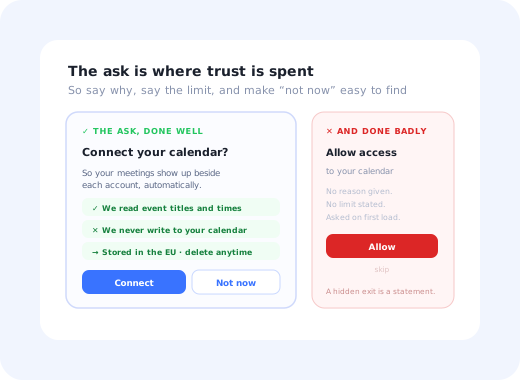
| "We need your calendar access" | "So we can show your meetings here; we never write to your calendar" | States the benefit and the limit; the limit is what does the work |
| A card required for the trial | No card, or an unmissable statement of exactly when and what you will charge | Removes the suspicion that the trial's real purpose is the auto-charge |
| A pre-ticked marketing consent | An unticked box with a plain description of what will be sent | Pre-ticking is read, correctly, as an attempt to obtain consent that would not be given |
| "Skip" in low-contrast grey | A skip option as legible as the primary action | Making the exit hard to see is the clearest possible statement of intent |
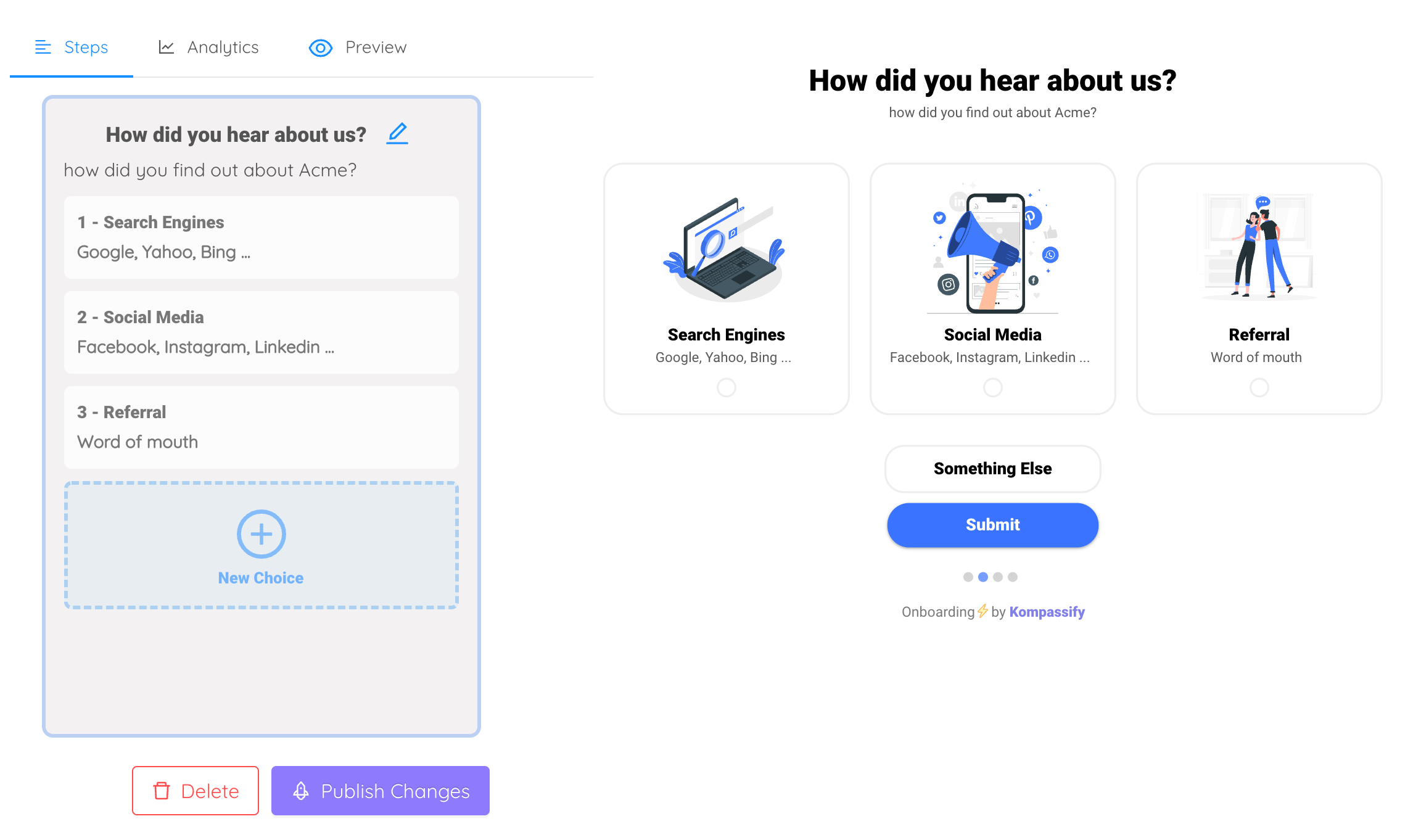
One question, an obvious escape hatch, and no pretence that it is required. That is what a cheap ask looks like.
Errors: The Largest Trust Opportunity You Have
Users do not expect software to be perfect. They expect it to be honest when it is not. That gap makes failure the highest-leverage trust moment in the product, the only one where you can end up ahead of where you started.
"We couldn't save your changes" beats "Error 500". Name the thing that failed and what it means for their work, not for your stack.
Keep the draft, preserve the input, offer the retry. A failure that costs the user twenty minutes of typing is remembered as negligence, not as bad luck.
Tell them whether it is fixed, whether you are on it, and what to do meanwhile. Silence after an incident does more damage than the incident.
The same principle applies to limits and degradations. If a feature is slow today, or an integration is stale, or an AI feature is uncertain about an answer, saying so costs a little capability trust and buys a lot of intent trust, a trade that is almost always worth making. Our guide to AI feature adoption covers the specific case, where verifiable output matters more than confident output.
Trust Debt: The Patterns That Quietly Spend It
Most trust damage is not caused by anything dramatic. It is caused by small, individually defensible decisions that each convert a little goodwill into a short-term metric. They are worth naming, because they are almost always introduced with good intentions and a growth target attached.
✅ Builds trust
- An unticked consent box with plain wording
- Cancellation available in the same place as upgrade
- A real export of the user's own data
- Pricing changes announced before they take effect
- A skip link as visible as the primary button
- Specific, checkable claims about data handling
- Saying "we don't do that yet" instead of implying you do
❌ Spends trust
- Confirmshaming: "No thanks, I don't want to grow"
- A cancellation flow with five retention screens
- Countdown timers on offers that never actually expire
- Fake activity notifications or invented social proof
- Limits discovered only when the user hits them
- A trial that silently becomes a subscription
- Emails the user never agreed to receive
The compounding problem with these patterns. Each one works, measurably, in the quarter it is introduced; that is why they spread. What they do not show up in is the number of people who quietly stop recommending you, the share of trials that connect fake data instead of real, and the fraction of churned users who would otherwise have come back. Trust debt is real debt: it is paid later, with interest, out of a budget nobody is tracking.
How to Measure Something You Cannot Measure Directly
There is no trust metric, and any single number claiming to be one is measuring something else. What you can do is watch the behaviours that only a trusting user performs, because trust is expressed through willingness to be vulnerable.
| Proxy signal | What it indicates |
|---|---|
| Real data vs. sample data | The share of new accounts that connect a production source rather than a test one, the clearest single indicator you have |
| Teammate invitations | Inviting a colleague means staking your own credibility on the product; people do not do it casually |
| Permission grant rate | Acceptance of an optional permission, measured per prompt, tells you whether that specific ask is landing |
| Survival of a bad session | Return rate among users who hit an error, the sharpest available test of intent trust |
| Support tone | Whether tickets read as "help me with this" or "what have you done", a qualitative signal your team already has |
| Effort scores after friction | Customer effort score asked right after a difficult moment, rather than at a random point in the month |
Where Onboarding Design Meets Trust
Most of what is described above happens in onboarding, because onboarding is where the asks are, where the promises are made, and where the user is deciding what kind of company you are. That makes the ability to change onboarding quickly a trust capability as much as a growth one. A confusing permission prompt or an over-long form is not a backlog item, it is an active withdrawal happening every day it stays live.
Kompassify lets you build and edit that layer (tours, tooltips, checklists, in-app messages and surveys) without a release, so an ask that is landing badly can be reworded and republished the same afternoon, and a promise that turned out to be inaccurate can be corrected before it costs anything. Kompassify itself is GDPR-compliant and hosted in the EU, which is the kind of specific, checkable claim this guide argues for: it is free up to 100 monthly active users, and paid plans start at $129/month. Building onboarding everyone can complete belongs on the same list; a flow that excludes people is a competence signal too.
Fix the ask that is costing you trust
Rewrite a permission prompt, shorten a form, add the explanation that was missing, and publish it the same day, without an engineering release. Free up to 100 monthly active users, plans from $129/month, GDPR-compliant and EU-hosted.
Start for free →The One-Paragraph Version
User trust is made of three things (capability, intent and predictability) and it behaves like a ledger where deposits are small and withdrawals are enormous. It concentrates in five moments: the first thirty seconds, the first ask, the first failure, the first bill and the exit. Build it with specific, checkable claims rather than reassurance, ask for things next to the value they unlock, make skipping as visible as proceeding, tell the truth when something breaks and protect the user's work while you do, and make leaving genuinely easy. Then watch the behaviours only trusting users perform: real data, real teammates, and coming back after a bad day.
Frequently Asked Questions
What is user trust in product design?
User trust is a person's willingness to become vulnerable to your product (to give it their real data, their team's time, their money and their professional reputation) based on an expectation that it will behave competently, in their interest, and consistently. It has three separable components: capability, meaning it can do the job; intent, meaning it is not trying to take advantage of them; and predictability, meaning it will behave the same way tomorrow. A product can be strong on two of the three and still feel untrustworthy, because users need all three before committing anything they cannot easily get back.
Where is user trust won and lost?
It concentrates in five moments rather than being spread evenly across the product. The first thirty seconds, where competence is judged from load speed, layout and whether the screen looks made for someone like them. The first ask (a signup form, a permission dialog, a connection request) which is a withdrawal made before anything has been deposited. The first failure, which is the only evidence of intent under pressure a user will ever get. The first bill, where any surprise damages intent and predictability at once. And the exit, where how hard cancellation is reads as a direct statement about what you thought of them all along.
How do you ask for permissions without losing users?
Move the ask next to the value it unlocks, and state the limit as well as the benefit. A permission prompt at launch asks the user to guess why; the same prompt at the moment the feature needing it is used makes the reason self-evident. Frame it as what you will do and what you will not (“so we can show your meetings here, we never write to your calendar”) because the limit is the part that does the work. Then make the skip option as legible as the accept button. Making the exit hard to see is the clearest possible statement of intent, and users read it correctly.
Why do errors matter so much for trust?
Because users do not expect software to be perfect; they expect it to be honest when it is not. That gap makes failure the only moment in the product where you can finish ahead of where you started. Three things decide the outcome: saying what happened in the user's terms rather than in stack terms, protecting their work by preserving the draft and offering a retry, and owning the next step by telling them whether it is fixed and what to do meanwhile. A failure that costs someone twenty minutes of typing is remembered as negligence rather than bad luck, and silence after an incident does more damage than the incident.
What is trust debt?
Trust debt is the accumulated cost of small, individually defensible design decisions that each convert a little goodwill into a short-term metric: confirmshaming, five-screen cancellation flows, countdown timers on offers that never expire, invented social proof, limits discovered only when hit, trials that silently become subscriptions. Each of these works measurably in the quarter it ships, which is why they spread. What they do not appear in is the number of people who quietly stop recommending you, the share of trials that connect fake data, and the fraction of churned users who would otherwise have returned.
Can you measure user trust?
Not directly, and any single number claiming to be a trust metric is measuring something else. What you can do is watch the behaviours only a trusting user performs. The clearest is the share of new accounts that connect a production data source rather than a test one. Others include teammate invitations, since inviting a colleague stakes the user's own credibility; per-prompt permission grant rates; return rate among users who hit an error, which is the sharpest test of intent trust; the tone of support tickets; and customer effort score asked right after a difficult moment rather than at a random point in the month.
Does making it easy to cancel hurt retention?
Usually the opposite, over any horizon longer than a quarter. A visible cancellation route and a real export of the user's own data make staying a choice rather than a trap, and people commit harder to choices they made freely. Retention flows built from obstacles convert some of the people already leaving while damaging the impression of everyone who merely looked, including users who were not going anywhere. The honest version, an easy cancellation with one clear question about why, keeps the option of coming back open and produces better information than five screens of friction.
What is the difference between trust and satisfaction?
Satisfaction is a judgement about what already happened; trust is a prediction about what will happen next. A user can be satisfied with today's session and still not trust the product enough to move their real workflow onto it, which is why satisfaction scores can look healthy while expansion stalls. The practical difference is that satisfaction responds to quality of experience, while trust responds to evidence of intent: what you ask for, what you disclose, what you do when things break, and how easy you make it to leave.