A customer gets a quote in ninety seconds, likes the price, and starts an application. Eleven questions later they are asked for a document they do not have to hand. They mean to come back. Three days on, a competitor's ad reminds them that they never did, and this time they finish that one instead.
Insurance onboarding is the discipline of preventing that, and then of surviving the year of silence that follows. It is a strange onboarding problem because the product is a promise the customer hopes never to use. There is no daily active usage to build, no feature to adopt. The two moments that matter are the purchase and the claim, and they are typically separated by a very long time in which the customer forgets you exist.
This guide covers what insurance onboarding includes, the five stages from quote to bound policy, where applicants really drop off, the underwriting wait, how broker and agent portal onboarding differs from direct-to-consumer, what to do in the quiet year, an eight-step design method, and the metrics that show whether any of it is working.
Key Takeaways
- Onboarding does not end at bind. A policy sold to someone who never returns is a renewal you will lose on price.
- The underwriting referral is the biggest recoverable leak; it is a communication failure, not a pricing one.
- Ask only what changes price or eligibility, explain each question where it is asked, and make the application resumable across devices.
- Brokers are professionals, not nervous consumers. They need speed and appetite clarity, not reassurance.
- Set expectations about what is not covered at purchase. Most first-claim complaints were created on the day the policy was sold.
- Track logins before renewal. It is the best leading indicator of retention you have.
What Is Insurance Onboarding?
Insurance onboarding: definition
Insurance onboarding is the process of taking someone from an initial quote to a bound policy they understand and can use, and then keeping them oriented through the long, quiet period before their first claim or renewal. It spans quote, application, underwriting, payment and binding, policy-document delivery, and the ongoing engagement that decides whether the customer renews.
It shares regulatory DNA with fintech onboarding (identity checks, third parties who can say no, waiting states you do not control) but the shape of the problem after purchase is completely different. A fintech customer uses the product weekly. An insurance customer, if all goes well, uses it never. That asymmetry is why an insurance onboarding strategy that stops at "policy issued" leaves most of the value on the table.
The line worth drawing: underwriting decides whether and at what price you will cover someone. Onboarding decides whether they get that far, whether they understand what they bought, and whether they are still a customer in fourteen months. Almost every improvement available to a product team lives in the second sentence.
The Five Stages From Quote to Bound Policy
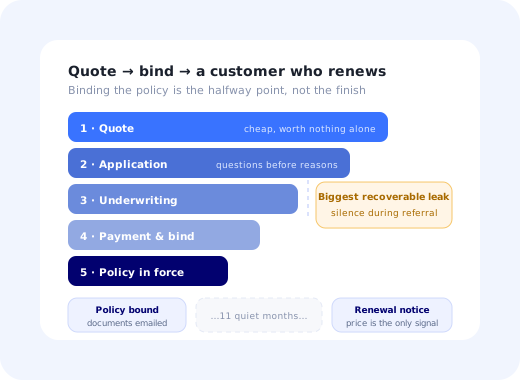
Whatever the line of business, the funnel has the same five stages, and each one leaks for its own reason.
1. Quote
Fast, indicative, and deliberately low-commitment. The mistake here is optimising the quote for conversion into the application at the cost of accuracy: an indicative price that moves at bind converts well at stage one and destroys stage four. Quote honestly, and if the number can change, say so at the point the number is displayed.
2. Application
The longest stretch and the one entirely within your control. Two rules cover most of it: ask only what changes the price or the eligibility decision, and explain every question that a reasonable person would find intrusive at the moment you ask it. "We ask for your occupation because it affects the risk assessment" costs one line and prevents a meaningful share of abandonments. The progressive profiling approach applies directly: everything not needed to bind can be collected later.
3. Underwriting
For straightforward risks this is instant and invisible. For everything else, the application is referred for manual review, and this is where the funnel bleeds hardest. See the next section; it deserves its own.
4. Payment and bind
The moment of truth, and the moment any earlier dishonesty comes due. If the final premium differs from the quote, the customer experiences it as a bait-and-switch even when the reason is entirely legitimate. Show the change, explain what caused it, and show it before the payment screen rather than on it.
5. Policy in force
Most insurers treat this as the finish line. It is the halfway point. What happens in the next ten minutes, and the next ten months, determines the renewal, and is the subject of the second half of this guide.
The Underwriting Wait: The Biggest Recoverable Leak
When an application is referred to a human underwriter, the customer's experience is typically a spinner, a vague "we'll be in touch", or worst of all a page that looks like an error. They have just spent ten minutes answering personal questions and the system has gone quiet. A large share of them do not come back.
Nothing about that is a pricing problem. The referral itself is legitimate and necessary; the experience of it is a design choice, and it is a choice most insurers have never revisited. Four things fix the majority of it:
- Name what is happening, in plain words "A specialist is reviewing your application because of X" is reassuring. "Pending" is not. Customers tolerate delay far better than they tolerate not knowing whether anything is happening at all.
- Give a realistic time, then beat it A stated window, "usually within one working day", converts an open-ended wait into a manageable one. Under-promise deliberately; the reputational cost of missing your own stated window is high.
- Make the application resumable from a link A meaningful share of applicants start on a phone and finish on a laptop, or come back three days later. If returning means starting again, they will not return.
- Design the decline, not just the approval A declined applicant is still a person who trusted you with their information. Explain what can be done (a different product, a different excess, a broker who can place the risk) rather than ending the conversation with a wall.
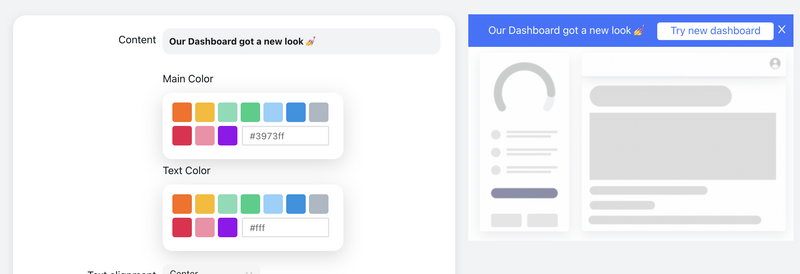
A persistent, honest status message during underwriting referral is one of the highest-return changes available in insurance onboarding.
Broker and Agent Portal Onboarding
If you distribute through intermediaries, you have a second onboarding problem with almost opposite requirements, and treating it as a variant of the consumer flow is a reliable way to lose distribution.
🧑 Direct policyholder
- Anxious, unfamiliar with the terminology
- Buys once a year at most
- Needs reassurance, plain language, and reasons for every question
- Judges you on clarity and price
- Optimise for: completion
🧑💼 Broker or agent
- Professional, fluent, in a hurry
- Quotes dozens of risks a week, across several portals
- Needs speed, keyboard-first flows and clear appetite information
- Judges you on how fast they can get a bindable quote
- Optimise for: quotes per hour
Three specifics matter for broker onboarding. First, appetite transparency: the fastest way to lose a broker is to make them spend four minutes on a risk you were never going to write. Say what you will and will not consider, up front, on the screen where they start. Second, repeat-quote efficiency: brokers re-quote similar risks constantly, so pre-population and duplication features do more for adoption than any tutorial. Third, ongoing communication beats the first-session tour: a broker onboards once and then works with you for years, so the guidance that matters most is the announcement of appetite changes, new products and wording updates, delivered inside the portal where they will actually be seen.
Commercial lines add a third population: the business customer, whose onboarding resembles enterprise onboarding more than consumer insurance: several people involved, documents that must be gathered internally, and a process that spans weeks. Make it resumable, delegable and visible, exactly as you would a multi-stakeholder software rollout.
The Quiet Year Between Purchase and Claim
This is the part almost everyone skips, and it is where renewal rates are actually decided. The default policyholder journey looks like this:
Documents emailed
Price is the only signal
A customer who has not heard anything useful from you in eleven months has no basis on which to judge you other than the number on the renewal letter. Every insurer competing on that letter is competing on price alone. The way out is to give policyholders reasons to return that are useful even when nothing has gone wrong:
Register for the portal, download the digital card, add a beneficiary, name a second driver. One concrete task, done while motivation is highest.
Plainly, at purchase. Most complaints at first claim trace back to an expectation set on the day the policy was sold, not to the policy wording.
Thirty seconds explaining how a claim starts. At the moment someone actually needs it they are stressed and will not read anything.
New address, new vehicle, new phone. Every change handled in the portal is a login, a touchpoint and a support call avoided.
"Has anything changed?" is genuinely useful, reduces underinsurance, and puts you in front of the customer before the renewal price does.
A renewal that references what changed during the year reads as a relationship. One that shows only a price reads as an invoice.
This is re-engagement applied to a product with an unusually long dormancy period. The mechanics are the same; only the timescale is different.
How to Design Insurance Onboarding in 8 Steps
- Define success as a policyholder who logs in, not a policy that binds
- Cut every application question that does not change price or eligibility
- Explain each remaining question where it is asked
- Make the application resumable across devices and days
- Design the referral wait as a product surface
- Show the final price, and any change, before the payment screen
- Give one concrete post-bind action within the first ten minutes
- Schedule the quiet year deliberately
1. Define success as a policyholder who logs in, not a policy that binds
Changing the definition changes the roadmap. Bind rate is a sales metric; first login within thirty days is an onboarding metric and a far better predictor of renewal.
2. Cut every application question that does not change price or eligibility
Audit the form question by question with an underwriter and a product owner in the same room. Marketing preferences, secondary contact details and anything "useful for later" all belong after bind, not before it.
3. Explain each remaining question where it is asked
One sentence, inline, at the field, not in a help centre and not in a modal that must be dismissed. This is the single cheapest conversion improvement in the whole funnel, and it is usually a tooltip rather than a code change.
4. Make the application resumable across devices and days
Save continuously, send a resume link, and preserve progress for long enough to matter. Then measure how many people use it: the number is usually far higher than anyone expects and justifies the work on its own.
5. Design the referral wait as a product surface
A status page or banner with what is happening, why, how long, and what the applicant should do meanwhile. Give it to a designer and treat it as a screen, because it is one, and it is seen by exactly the applicants you most want to keep.
6. Show the final price, and any change, before the payment screen
If the premium moved between quote and bind, show the old number, the new number and the reason, one step earlier than the payment form. Customers accept a justified change; they do not accept discovering it at checkout.
7. Give one concrete post-bind action within the first ten minutes
Not a survey and not a cross-sell. Something the customer benefits from: the digital card, the app, the document vault. This is the action that converts a policy into a relationship, and it has to happen while attention is still there.
8. Schedule the quiet year deliberately
Two or three genuinely useful touchpoints, planned in advance, delivered where the customer is. Not a marketing calendar, an orientation calendar, whose purpose is that the customer knows what they have and how to use it before they need to.
Insurance Onboarding Metrics
| Metric | Definition | What it tells you |
|---|---|---|
| Stage conversion | Quote → application → referral → bind, measured separately | Which stage is costing you the quarter |
| Application abandonment point | The specific question where people stop | A direct, actionable edit list |
| Referral resolution time | Median hours from referral to decision | The size of your largest recoverable leak |
| Time to first portal login | Days from bind to first authenticated visit | Whether the post-bind action is working |
| Pre-renewal login rate | Policyholders who logged in at least once during the term | The best leading indicator of renewal you have |
| Broker time-to-first-bind | Days from a broker's first login to their first bound policy | Whether your portal earns a place in their rotation |
Do not report quote volume as an onboarding metric. Quotes are cheap, easily inflated by aggregators and price-checkers, and almost entirely disconnected from whether your onboarding works. Quote-to-bind, stage by stage, is the honest version of the same idea.
Insurance Onboarding: Do vs. Don't
✅ Do
- Explain each application question where it is asked
- Treat the underwriting wait as a designed screen
- Make applications resumable across devices and days
- Show price changes before the payment step
- State plainly what is not covered, at purchase
- Give one useful post-bind action in the first ten minutes
- Give brokers appetite clarity before they start typing
- Plan two or three useful touchpoints across the policy year
❌ Don't
- Treat bind as the end of onboarding
- Show "pending" with no explanation or timeframe
- Quote a price you know may move, without saying so
- Collect data at application that could be collected after
- End a decline with a wall and no alternative
- Give brokers the consumer flow
- Let the renewal notice be the year's only contact
- Report quote volume as an onboarding success metric
Building the Guidance Layer Without Engineering Time
Quote engines and policy administration systems change slowly, and for good reasons. The layer that determines whether applicants finish and policyholders return does not have to. With Kompassify you can build it on top of your existing screens:
- One-sentence explanations beside difficult questions Occupation, no-claims history, prior convictions, sums insured: the questions that feel intrusive without a reason attached.
- A status banner during underwriting referral Persistent, honest and targeted at exactly the applicants in that state: the single highest-return element on this list.
- A first-login tour of the policyholder portal Where documents live, how to make a change, how a claim starts: shown once, then again a year later when the customer has forgotten.
- A post-bind checklist A short checklist covering the digital card, the app and the beneficiary: the actions that convert a policy into a relationship.
- Appetite and wording announcements for brokers In-portal announcements that reach intermediaries where they work, rather than in a circular they filed unread.
- Stage-by-stage funnel analytics Analytics on each step of the application so the abandonment question stops being a matter of opinion.
Kompassify is no-code, GDPR compliant and EU-hosted, free for under 100 monthly active users, with paid plans from $129/month.
Turn Applicants Into Policyholders Who Come Back
Add inline question help, an honest referral status and a post-bind checklist to your existing journey: configured, not rebuilt.
Start FreeFrequently Asked Questions
What is insurance onboarding?
Insurance onboarding is the process of taking someone from an initial quote to a bound policy they understand and can use, and then keeping them oriented through the long, quiet period before their first claim or renewal. It spans quote, application, underwriting, payment and binding, the delivery of policy documents, and the ongoing engagement that determines whether the customer renews. Unlike most purchases, the product is a promise the customer hopes never to use, which is why onboarding after the sale matters as much as the funnel before it.
Where do applicants drop off in insurance onboarding?
In four places. First, at the application form, where questions arrive faster than reasons are given. Second, at document upload, where a licence photo or proof of address on the wrong device stops everything. Third, during underwriting referral, when an automated quote is sent for manual review and the applicant is left with a screen that says nothing. Fourth, at payment, where the price the customer sees at bind differs from the indicative quote they started with. The third is usually the largest and the most recoverable, because it is a communication failure rather than a pricing one.
How do you reduce quote-to-bind drop-off?
Ask only what changes the price or the eligibility decision, in that order, and explain each question in one sentence where it is asked. Save the application continuously and make it resumable from a link, because a meaningful share of applicants start on a phone and finish on a laptop. Never let a referral to manual underwriting look like an error: say what is happening, how long it usually takes and what happens next. And make sure the number shown at bind is the same number that was quoted, or explain the difference before the customer discovers it.
How is broker or agent onboarding different from direct customer onboarding?
A broker is a professional user, not a nervous consumer. They are fast, they use your portal alongside three competing ones, and their loyalty follows whichever is quickest to quote. So broker onboarding optimises for speed and recall rather than reassurance: keyboard-first workflows, bulk and repeat quoting, transparent commission and appetite information, and clear indications of what you will and will not write. The other structural difference is that a broker onboards once and then works for years, so the highest-value guidance is not the first-session tour but the ongoing announcement of appetite and product changes.
What should happen right after a policy is bound?
Three things, quickly. Confirm in plain language what is now covered and, just as importantly, what is not: most complaints at first claim trace back to an expectation set at purchase. Deliver documents somewhere retrievable rather than only by email attachment. And give the customer one concrete next action that creates a reason to return: registering the mobile app, adding a beneficiary, downloading a digital insurance card, or completing an optional risk-reduction step. Without that action, the next interaction is a renewal notice a year later to a customer who has forgotten who you are.
How do you keep policyholders engaged between purchase and claim?
Give them things to do that are useful even when nothing has gone wrong: an annual cover review, a way to update a vehicle or an address, risk-reduction guidance, and a clear reminder of what the policy actually includes. The aim is not engagement for its own sake: it is that a customer who has logged in during the year renews at a materially higher rate and, when a claim happens, already knows where to start. Insurers who only appear at renewal are competing on price alone, because price is the only thing the customer has to judge them on.
Which metrics matter for insurance onboarding?
Track quote-to-bind conversion by stage rather than as a single number; application completion rate and the specific question where abandonment concentrates; referral resolution time and the abandonment rate during referral; time from bind to first portal login; and the share of policyholders who log in at least once before renewal, which is the best available leading indicator of retention. For broker channels, add quotes per broker per week and the time from a broker's first login to their first bound policy.
Can you improve insurance onboarding without engineering releases?
A large part of it, yes. The quote engine and the policy administration system are engineering work, but the layer that decides whether people finish (one-sentence explanations beside difficult questions, a visible status banner during underwriting referral, a first-login tour of the policyholder portal, a post-bind checklist, and reminders that bring people back to an unfinished application) sits on top of existing screens. With a no-code platform like Kompassify a digital or distribution team can build and change that layer itself, target it separately at consumers and brokers, and update it the day the wording changes. Kompassify is GDPR compliant and EU-hosted, free for under 100 monthly active users, with paid plans from $129/month.